A lot of people seem to be addicted to that brown, liquid substance… and no, I’m not talking about hash oil. I’m talking about something much more legal that has its origins in Ethiopia. That wet, brown stuff has been called java, joe, rocket fuel, morning mud, or simply, coffee. Some people are so addicted that they don’t even care much about the flavor; they will drink it from a drip machine using grounds that have been stored in a #10 can for who knows how long (aka Folgers, MJB, etc.). Those less expensive canned coffees are typically made from robusta beans rather than arabica, so their flavor is a bit less complex (though they still taste like “coffee”). The upside, if you’re addicted to the increased energy that coffee seems to produce, is that robusta beans have much more caffeine in them (about twice that of the popular arabica beans touted by gourmet coffee brands). Your specialized, regional (Sumatra, Ethopia, Jamaica Blue Mountain, Kona, etc.) coffees are typically going to be sourced and roasted from arabica beans (technically coffee “cherries”). That’s what you might find at Starbucks, Peet’s, or, more to my actual point of this life hack, within the little plastic K-Cups marketed by Keurig Dr Pepper Inc (who knew that Keurig bought out Dr Pepper, huh?), and others.
Some people feel the need to fork over their hard-earned dollars to their particular coffee purveyor of choice, be it Starbucks, Dutch Brothers, Peet’s, or other local roaster and seller on a regular basis. Some people like to save a few bucks and buy the pre-ground stuff from the aforementioned brands at their local grocery store and make it at home by the pot. Others, like me, who could be single, or just can’t imagine drinking an entire pot of coffee at a time, yet who are still frugal and don’t want to stand in line and pay over $2.00 for a single cup of drip coffee every day, might lean toward the small “pod” or “cup” options that use a specialized machine to make a single cup of coffee at home. I researched the available options several years ago and sided with Keurig and the K-cup. Even with all the marketing, packaging, etc., the cost of a single K-cup is typically around 50 cents, or lower if you buy them in bulk. The cost of the machine to actually brew a K-cup… that’s an entirely different story. It’s not for the faint of heart or someone who only wants an “occasional” cup of coffee. It’s for someone like me, who has gone through boxes and boxes (and boxes) of K-cups after purchasing the machine.
Every environmentalist will immediately tell you the downside of K-cups. There are millions of “used” little plastic cups going into the environment everyday in people’s waste bins. Most of them are complete, with foil lids and used coffee grounds inside. Some people do actually get a little twinge of guilt for the environment, but they don’t want to go through the hassle of cutting open the K-cups after they’ve been used. It’s a messy process, scraping out the wet, now somewhat smelly coffee grounds, washing everything off, then tossing the plastic cup into the recycle bin. Instead, they just toss the whole thing in the trash and live with their little pangs of guilt. I, my friends and fellow K-cup users… have found a better way!
If you (carefully) cut open the cup BEFORE you use it, it’s a much easier and cleaner process to separate the components. I first did it as a solution to another problem I was having. My Keurig machine kept “jamming” (giving me the error code that tells me to clean the grounds out of the needle) about every other K-cup I used from Costco. The Kirkland brand makes a good cup of coffee, but jamming all the time can be frustrating. You have to use a special little “cleaner” cup to clear the needle, then unplug the machine and plug it back in again to clear the code (someone in the design department at Keurig wasn’t thinking very well on that one). I’m not sure if it’s my older Keurig machine, or that they fill their Kirkland cups too full. In any case, I decided to try another option and haven’t had any problems since. I cut open my K-cups and pour the fresh coffee grounds into my Keurig reusable K-cup pod filter, then brew my cup of coffee. The reusable filter cost me less than 10 bucks on Amazon and can be used with ANY coffee grounds you wish to try. Then the clean and still dry cup, foil lid, and paper filter can be disposed of properly. The plastic goes in my recycling bin, the paper cup into my organics bin, and the foil lid into the waste bin. Any environmentally friendly K-cup users who don’t want to deal with the “after” mess can suffer a minor inconvenience before you make your cup of coffee. The procedure only takes a couple of minutes. I took some photos of the process to make a more colorful blog (and because I’m a nerd), so I’ve added them below.
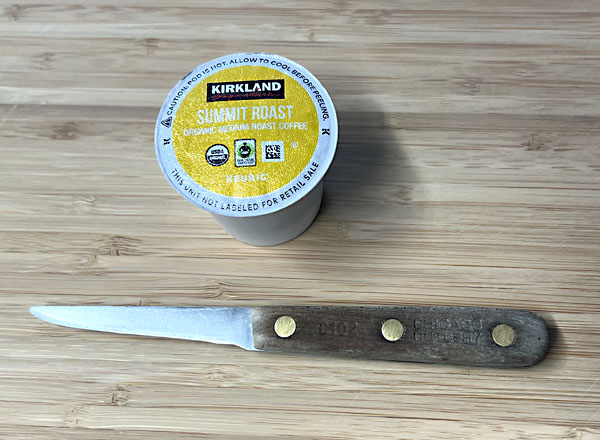
Start with a small, sharp knife and your K-cup

Carefully cut through the foil at the edge and follow it around the plastic cup until you’ve removed the foil from the top of the cup

With the foil removed, you can see how full the K-cup is with grounds, take care not to spill any while cutting off the foil
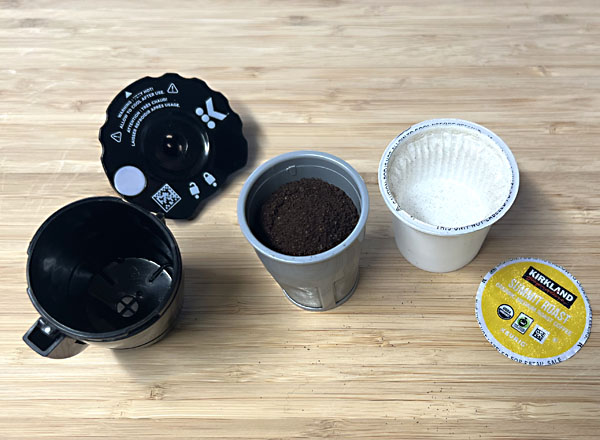
With the grounds transferred to the reusable filter, you can now cut the paper filter out of the plastic cup
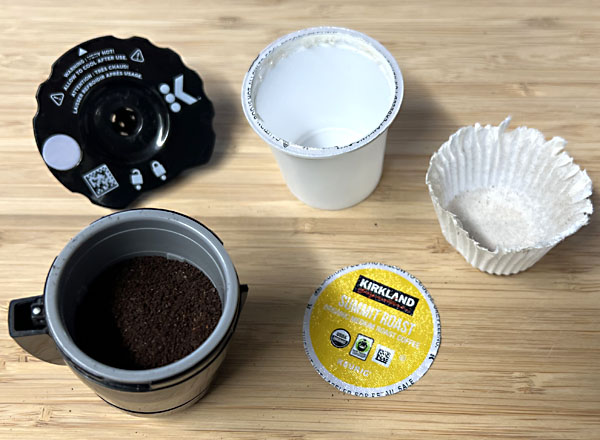
Dispose of each component properly, put the lid on the reusable filter pod, then brew and enjoy your cup of coffee!
PA


 The Pondering Absurdist
Leave a reply to iamthesunking Cancel reply